
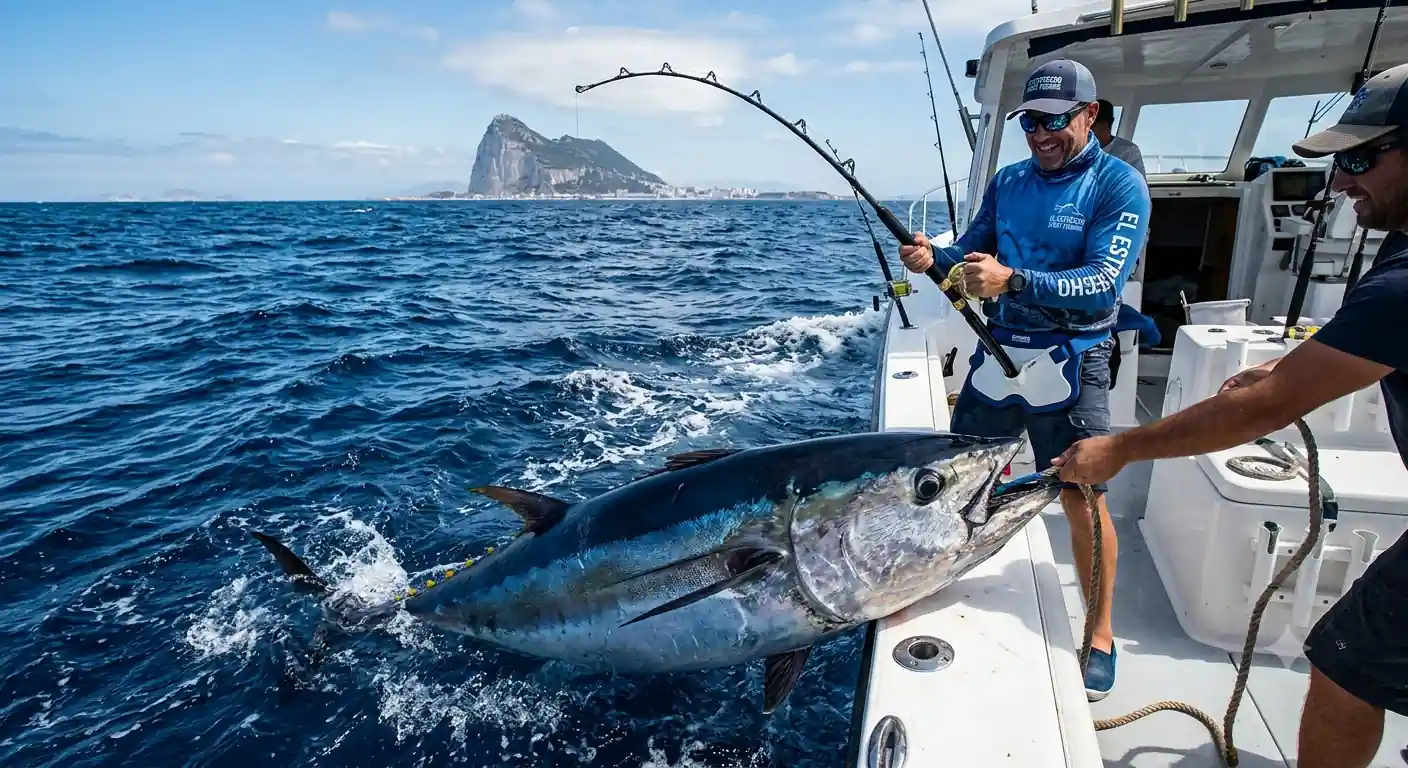
The Strait of Gibraltar is one of the most vital ecological corridors on the planet. Every year, the waters dividing Europe and Africa become the stage for the migration of the Atlantic bluefin tuna (Thunnus thynnus), a species as highly prized as it is strictly protected, requiring meticulous legal oversight.
Its fishery management in Spain, governed under ICCAT (International Commission for the Conservation of Atlantic Tunas) guidelines, establishes a very clear legal boundary between the commercial and recreational sectors. With catch quotas that run out in record time and severe penalties for non-compliance, navigating the Strait with fishing gear on board requires a deep understanding of a constantly shifting landscape of closures and seasonal bans.
The bluefin tuna fishing ban in the Strait is not a restriction for fishers, but rather the ultimate guarantee that future generations will continue to find this silver giant off our coasts.
RumboMed Team
1. Commercial Fishing: Almadrabas and quota limits
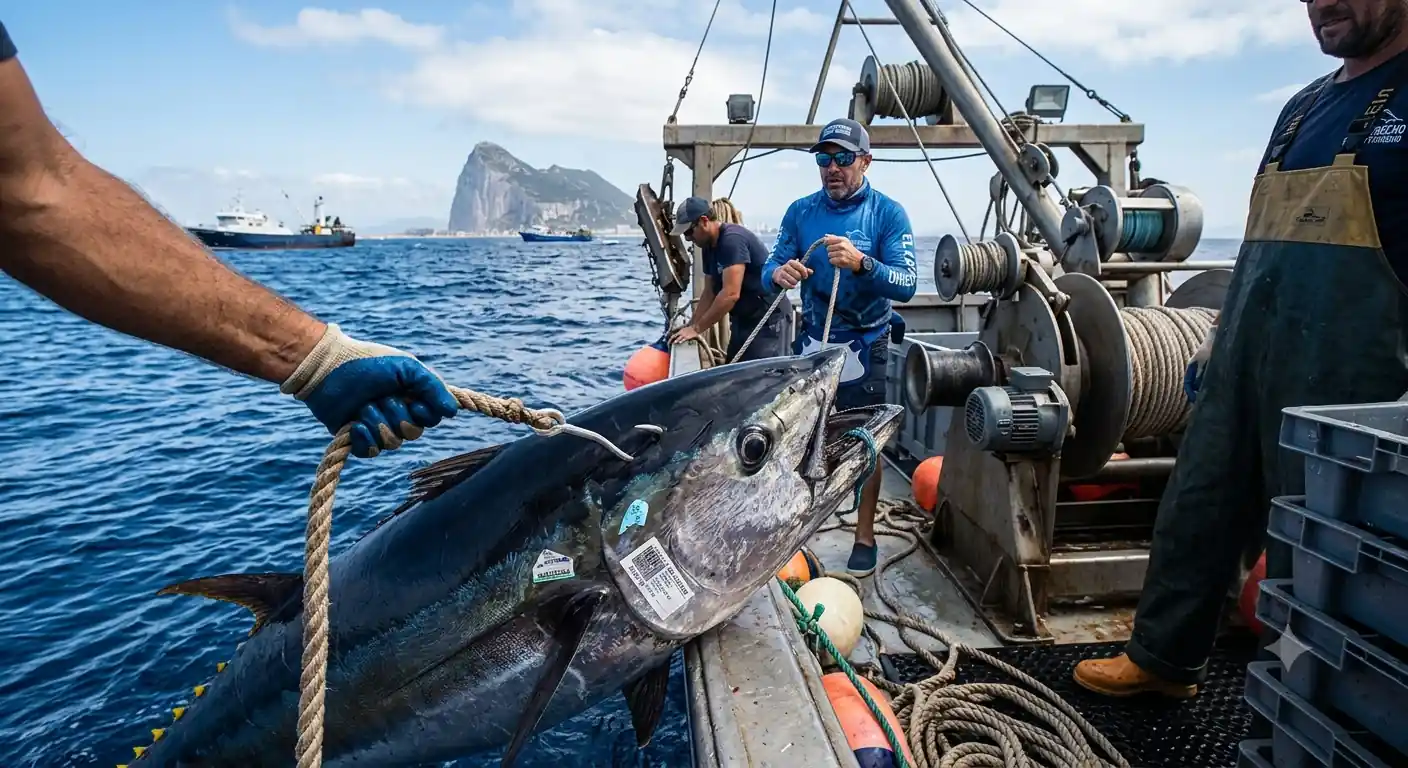
For the commercial sector, bluefin tuna fishing in the Strait combines thousands-of-years-old traditional methods like the almadraba (trap nets) with artisanal handline and longline fleets. Their activity is not governed solely by calendar dates, but by the dynamic depletion of the Total Allowable Catch (TAC):
Closure via Quota Depletion
Maritime Authorities and the Ministry of Agriculture, Fisheries, and Food monitor daily landings. As soon as the commercial fleet assigned to a specific area or gear reaching its weight limit, an immediate closure of the fishery is decreed, initiating the mandatory ban regardless of the time of year.
Seasons and Size Controls
The bulk of the commercial campaign takes place between spring and early summer, coinciding with the tuna's migration into the Mediterranean. In addition to ecological closures, inspections at ports across the Strait (such as Tarifa, Barbate, or Algeciras) strictly penalize any catches failing to meet the minimum legal size of 30 kg or 115 cm.
2. Recreational and Sports Fishing: Mandatory Catch & Release
For hobbyists targeting big game fish from recreational boats, rules in the Strait are exceptionally tight. While the open season is usually authorized at the beginning of summer, the practical reality differs dramatically from commercial operations:
The On-Board Retention Ban
The quota allocated for recreational fishing in Spain is very small. Consequently, the legal retention window (the period you are allowed to keep the fish) typically lasts only a few days or weeks before the Ministry declares an official closure. From that exact moment, a strict harvest ban goes into effect.
Mandatory "Catch & Release" Practices
Once the retention quota is closed, sports fishers are exclusively allowed to practice catch and release. The law demands that the specimen be safely returned alive to the sea immediately, minimizing tackle damage and strictly forbidding bringing the tuna onto the boat deck if it compromises its survival.
Responsible Navigation and Yacht Charter in Regulated Waters
The tightening of maritime inspections in the Strait of Gibraltar and the Costa del Sol highlights that enjoying our rich marine environment demands absolute compliance with current frameworks. Overlooking the boundaries of protected areas or lacking specific authorization licenses (such as Annex III for specially protected species) can lead to severe fines for recreational skippers.
At RumboMed, we firmly advocate for sustainable nautical tourism that respects marine biodiversity. Our entire charter fleet and itineraries across Málaga, Marbella, and surrounding areas operate under the strictest regulatory standards. We provide fully licensed vessels and professional advice to ensure you sail with total peace of mind, enjoying the sea without altering its ecosystems or violating seasonal fishing restrictions.
Looking for a premium sailing experience with zero regulatory surprises? Explore our boat rental catalogue and take to the sea knowing you are in the hands of professionals committed to protecting the ocean.