
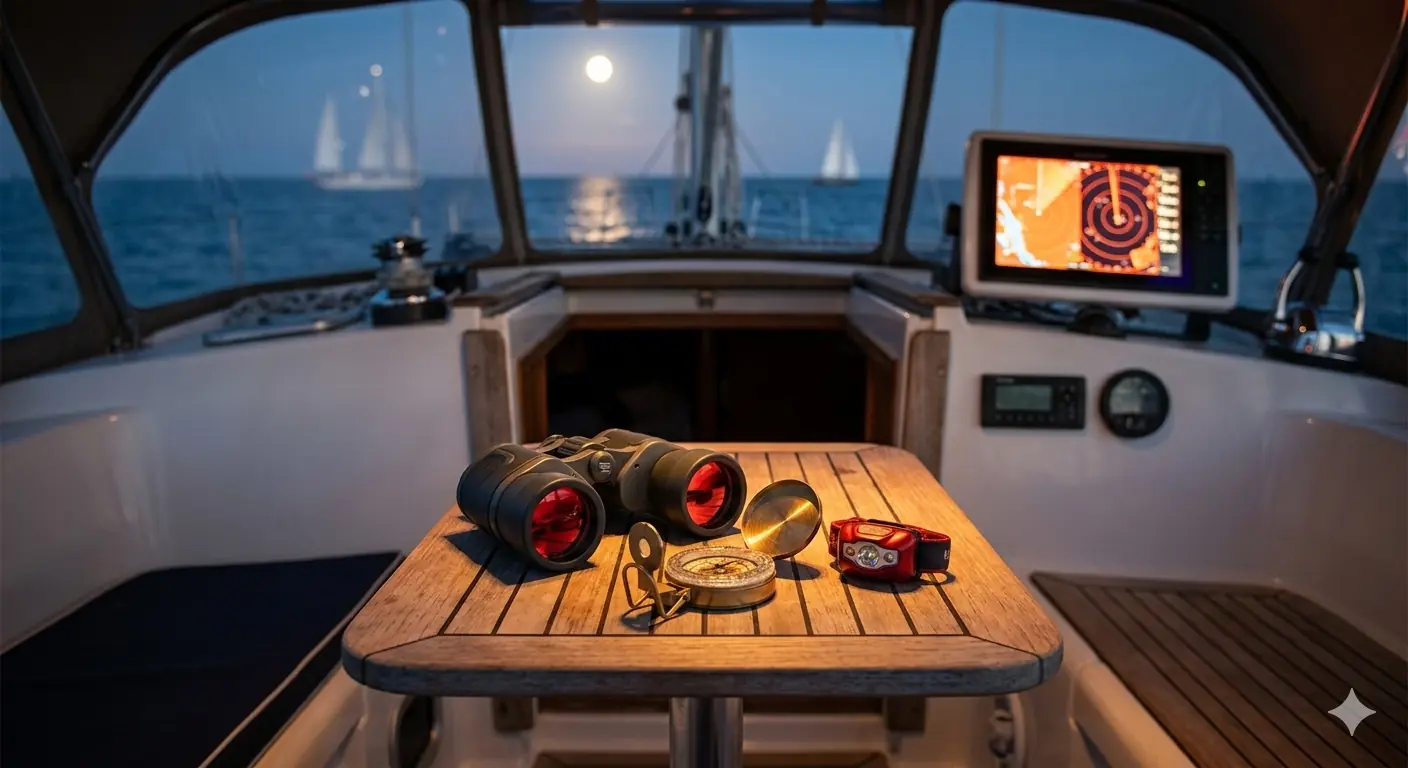
Sailing at night is perhaps one of the most mystical and rewarding experiences the sea has to offer. However, what is obvious by day becomes a technical challenge in the dark.
At RumboMed, we believe every skipper should experience the peace of a night watch. The sound of the hull cutting through the water intensifies, and light pollution fades away, allowing for a unique connection with the environment. But such beauty requires impeccable preparation.
In the dark, the sea isn't seen; it's felt. The key is to trust your instruments and sharpen your senses.
RumboMed Staff
Safety: To See and Be Seen
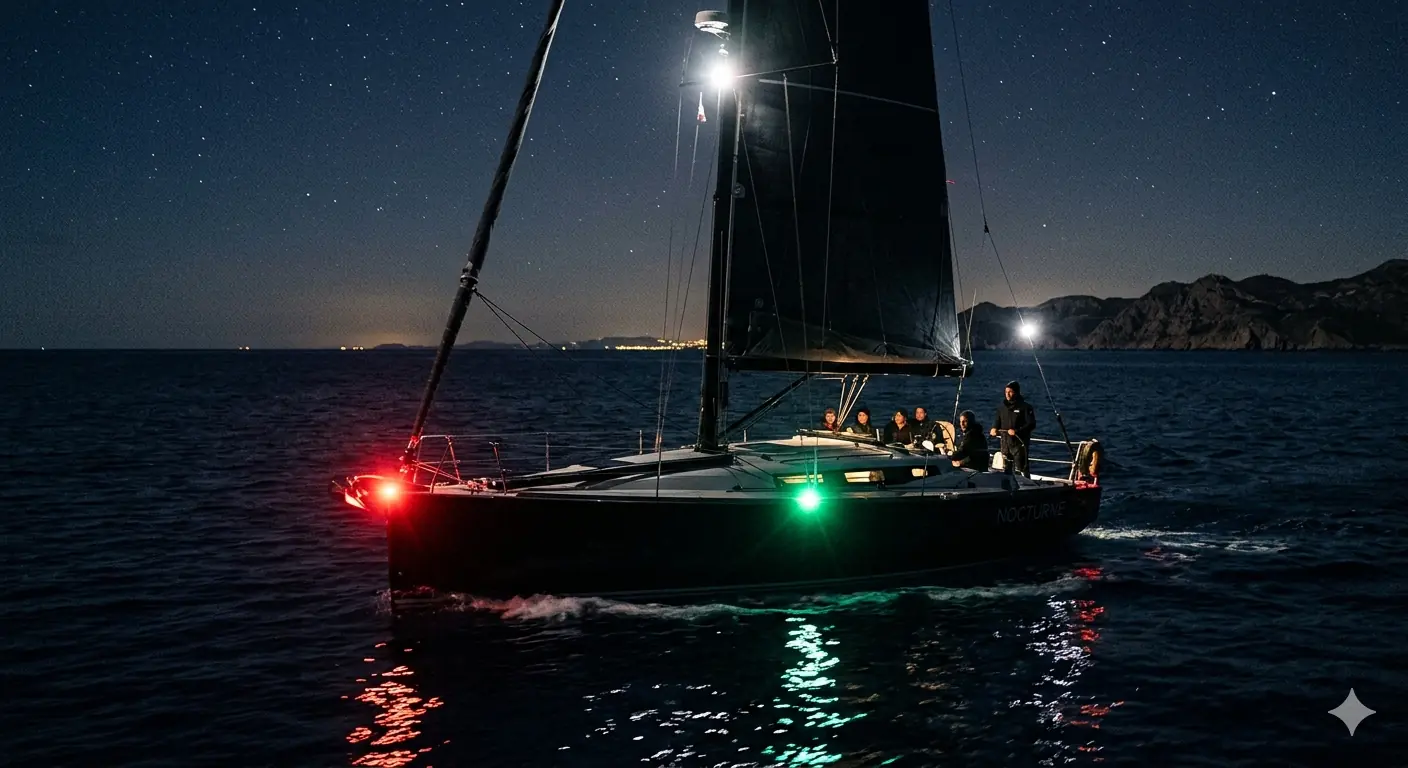
The COLREGs (International Regulations for Preventing Collisions at Sea) are strict. Before the sun sets, it is mandatory to verify that the sidelights (port and starboard) and the stern light are working perfectly.
Night Vision
Avoid white cabin lights. Use red light to maintain your eyes' dark adaptation.
Radar and AIS
Your best allies for detecting vessels that may not be showing lights or are at anchor.
Crew Preparation
Fatigue is the greatest enemy during night passages. Organizing watch systems and keeping the crew safe within the cockpit is vital.
Essentials
- Life jacket with strobe light
- Jacklines (Life lines) installed
- Safety harness
- Handheld VHF radio ready
Safe Course
- Lighthouse identification
- Depth monitoring
- Avoid shallow water zones
- Maintain 360° lookout
Is your boat ready for adventure?
Before a long or overnight passage, ensure your electrical systems won't fail you. At RumboMed, we check your electronics so you can sail with peace of mind.
Request Electronics Review