
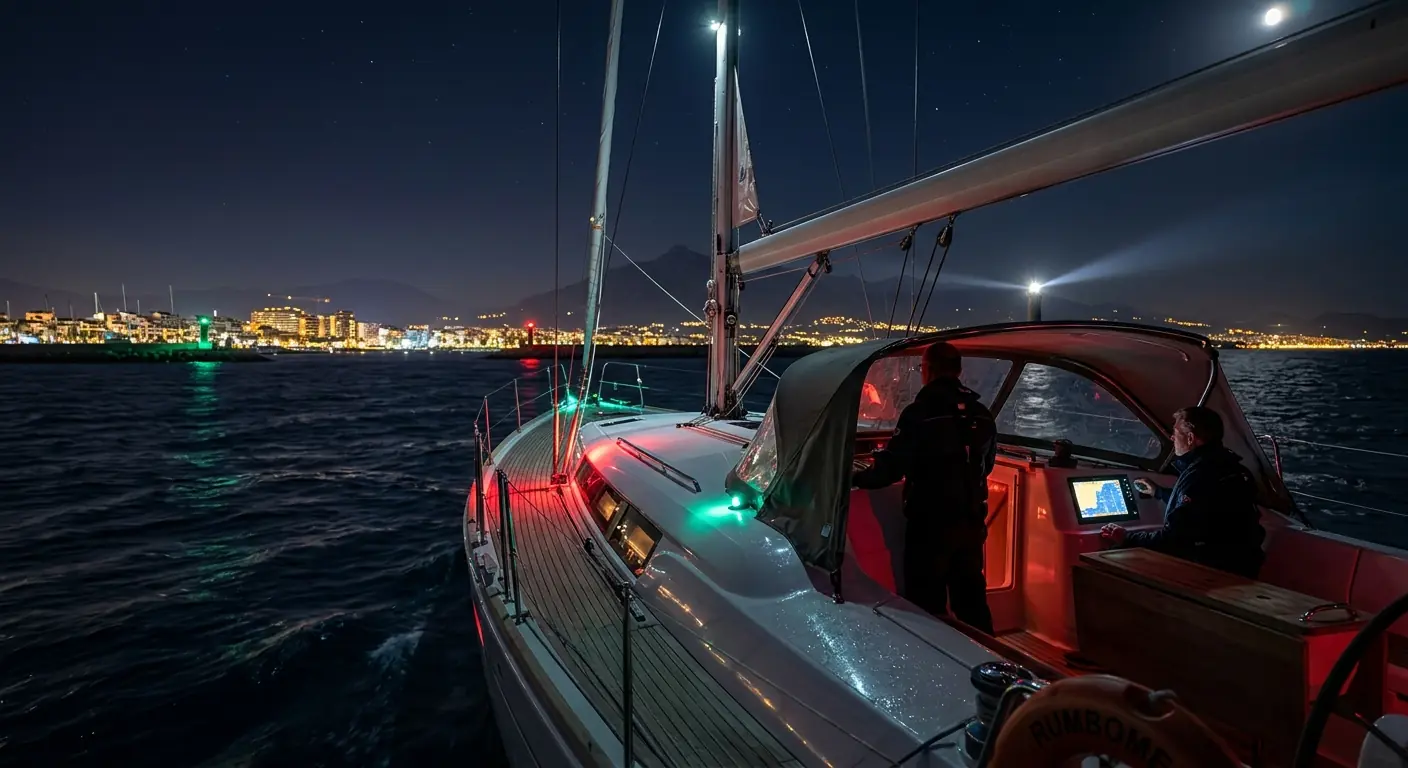
Gazing at the illuminated coastline of Malaga, Benalmádena, or Marbella from the sea after dusk is one of the most mesmerizing experiences the Costa del Sol has to offer. However, once daylight vanishes, visual landmarks change drastically, demanding heightened alertness and technical rigor.
Whether you are a private boat owner or a professional skipper conducting sunset cruises or night charters, mastering visual orientation techniques, properly managing onboard electronics, and understanding COLREG light requirements is key to a smooth and safe voyage.
When sailing at night, human eyesight loses its natural distance perception; thorough preparation, onboard electronics, and deck discipline become your true compass.
RumboMed Team
Essential Preparation & Safety Checks
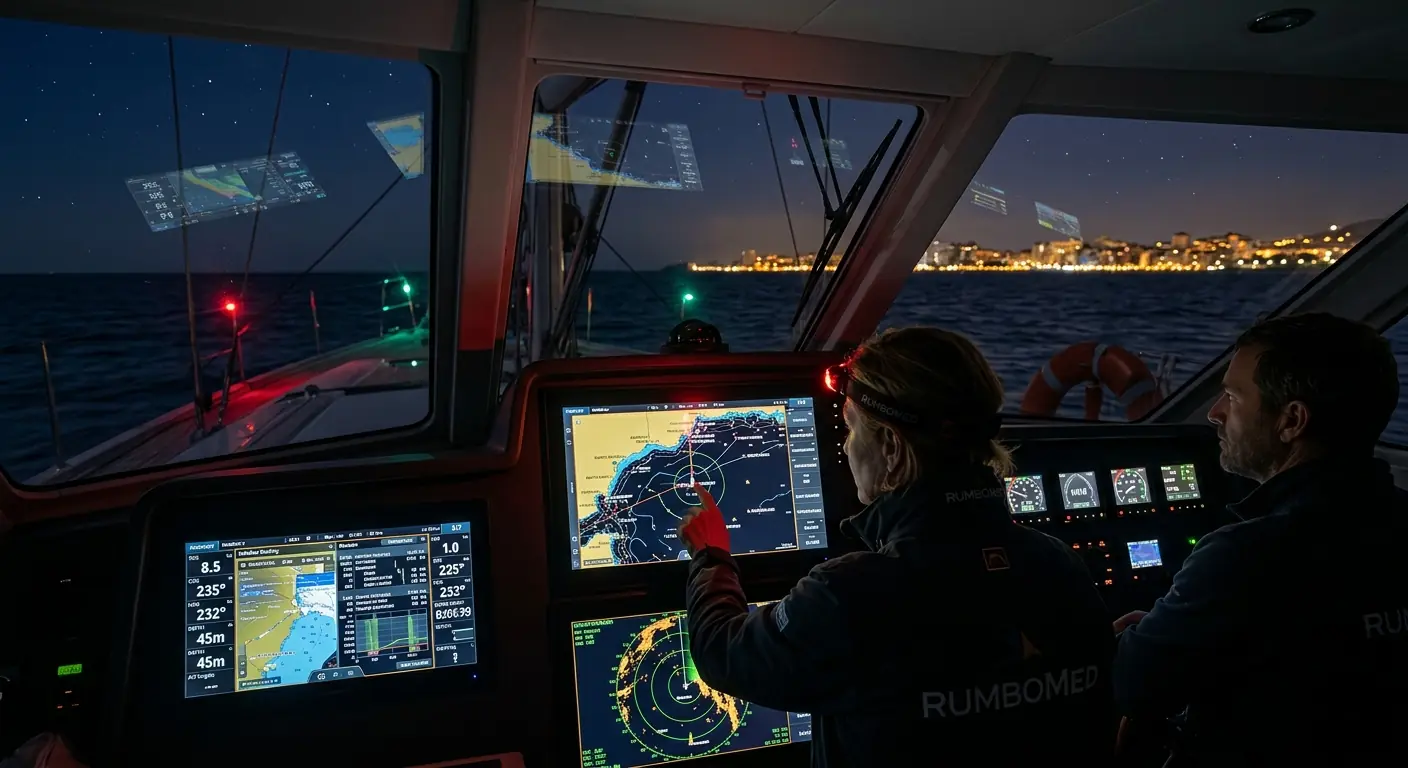
Before casting off for a journey after dark, a thorough inspection of your vessel's electrical and safety systems is mandatory:
Preserving Night Vision
Keep bridge lights dim or switched to red mode. The human eye takes up to 20 minutes to fully adapt to darkness after exposure to bright white light.
Clear Decks & Safety Harnesses
Ensure the cockpit and foredeck are free of loose lines or gear. Anyone stepping on deck at night must wear a life jacket with a strobe light and safety harness.
Visual Orientation: Lighthouses & COLREG Lights
Even with GPS chartplotters and AIS transponders, the skipper's ability to read the visual horizon remains a crucial seamanship skill:
- Key Costa del Sol Lighthouses: Identify light flash characteristics beforehand on chart data for key beacons such as Calaburras Lighthouse in Mijas, Marbella Lighthouse, or the Malaga Light (La Farola).
- Navigation Lights Verification: Test sidelights (port/starboard), stern, and masthead lights prior to departure.
- Commercial Traffic Identification: Traffic can be heavy off Malaga Bay and near the Strait of Gibraltar channels. Recognizing towing, fishing, or restricted maneuverability vessel lights prevents collision risks.
Safe Overnight Anchoring
If you plan to spend the night anchored in a cove or along the shore, vigilance must continue after setting the anchor:
Overnight Anchoring Protocol
- Hoist the mandatory 360-degree white anchor light.
- Verify anchor hold by backing down gently under engine power before shutting down.
- Set the GPS or navigation app anchor drag alarm.
- Select good holding ground (sand/mud) sheltered from offshore night winds (terral).
Common Pitfalls to Avoid
- Leaving high-power deck lights on, blinding nearby vessels and ruining your night vision.
- Mistaking coastal city lights for aid-to-navigation beacons or anchor lights.
- Anchoring too close to harbor fairways or high-traffic channels.
- Failing to monitor depth sounders for tidal drops or wind shifts.
Want to enjoy the sea at night with total peace of mind?
At RumboMed, we offer professional skippered night charters, marine electronics consultation, and vessel preparation for overnight trips along the Costa del Sol.
Inquire About Night Charters & Services