
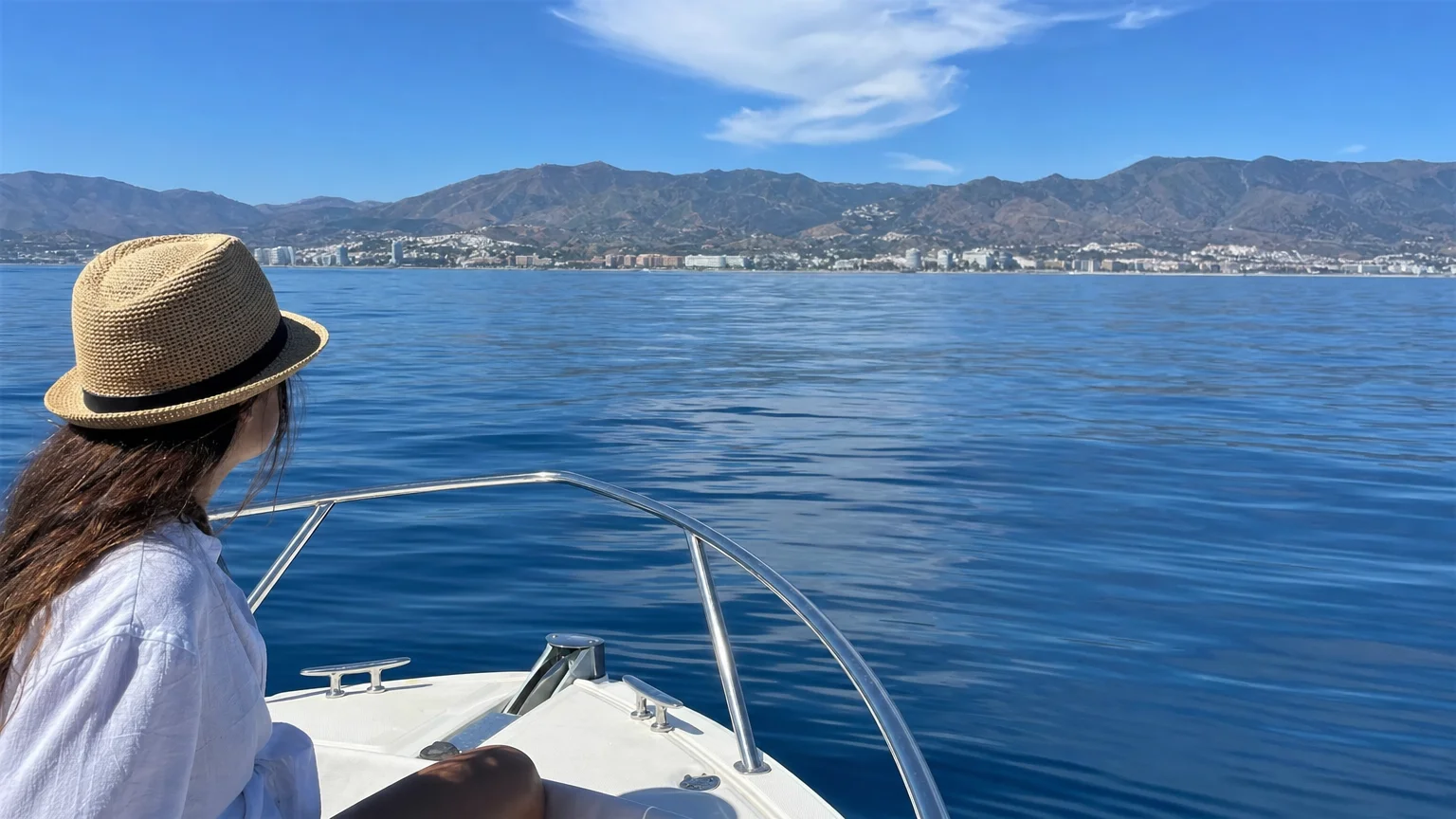
A Living, Diverse and Nearby Sea
The Mediterranean is much more than a blue landscape. Beneath its surface, fish, molluscs, crustaceans, algae, seagrass meadows and microorganisms coexist, forming a complex web of life. From a boat in the Benalmádena and Costa del Sol area, you cannot always see everything happening underwater, but every wave is part of an ecosystem that deserves attention.
Marine life changes depending on depth, temperature, season, currents and the type of seabed. Rocky areas may host communities that are very different from those found on sandy bottoms, while near the coast there are species adapted to wave movement and human presence. Understanding this variety allows you to appreciate each trip out to sea even more.
- Observe the sea as an ecosystem, not just as a leisure space.
- Pay attention to changes in colour, feeding birds or surface activity without disturbing the environment.
- Remember that many species remain hidden or far away, so not seeing wildlife does not mean the sea is empty.
Characteristic Mediterranean Species and Habitats
The Mediterranean is home to many species of coastal fish, invertebrates, cephalopods and seabirds. Marine mammals and reptiles such as turtles are also present, although their appearance depends on many factors and should never be taken for granted. The important thing is to maintain a calm and respectful attitude of observation if any encounter takes place.
One of the Mediterranean’s most valuable features is its seagrass meadows, such as those formed by marine flowering plants. These plants are not algae: they have roots, leaves and flowers, and they provide shelter and nursery areas for many species. They also help stabilise the seabed and contribute to the overall health of the ecosystem.
- Do not try to touch fish, jellyfish, starfish, live shells or other organisms.
- Avoid removing anything from the seabed: even a shell can be part of the natural cycle.
- If you go snorkelling or swimming, keep your distance from rocks, seabeds and underwater vegetation to avoid damaging them accidentally.
How to Observe Marine Wildlife Without Disturbing It
Responsible observation is based on a simple idea: the experience should adapt to the animals’ behaviour, not the other way around. If wildlife appears at the surface, it is best to remain calm, avoid unnecessary noise and refrain from sudden movements. The priority should be not to interfere with their path or cause changes in behaviour.
From a boat, keeping a sensible distance allows you to enjoy the moment without putting pressure on the animals. Chasing, surrounding or trying to get too close can be harmful. The best observation is usually the most patient: watch, listen and let the sea follow its own rhythm.
- Do not feed marine animals or birds: it alters their behaviour and can harm their health.
- Do not throw objects into the water to attract wildlife or to get photographs.
- If you see an injured, entangled or stranded animal, notify the crew or the appropriate services instead of intervening on your own.
Waste and Plastics: Small Gestures with a Big Impact
One of the most visible problems in the marine environment is the presence of waste. Bags, wrappers, cigarette butts, ropes, packaging remains or plastic fragments can end up floating, sinking or trapped among rocks. For many species, these materials can be mistaken for food or become traps.
Prevention is the most effective measure. On a nautical outing, every object should be kept under control, especially when it is windy. A simple oversight can cause a napkin, bottle cap or light piece of plastic to end up in the water. Taking fewer packages, reusing containers and securing your belongings help reduce risks.
- Keep all waste on board until it can be placed in a suitable bin.
- Avoid carrying loose lightweight items such as bags, straws, papers or wrappers.
- If you find floating rubbish and it can be collected safely, check with the crew first.
Swimming, Snorkelling and Anchoring Responsibly
Swimming in the Mediterranean is one of the most enjoyable experiences during an outing along the Costa del Sol, but it also requires certain environmental precautions. When entering the water, it is advisable to avoid jumping into sensitive areas, chasing wildlife or leaning on seabeds, rocks or vegetation. Buoyancy and movement control are key to avoiding damage to the environment.
Responsible anchoring is also important for protecting the seabed. Not every place is suitable for dropping anchor, which is why it is always best to follow the crew’s instructions. Avoiding damage in sensitive areas helps conserve habitats that take a long time to recover.
- Use sunscreen responsibly and let it absorb before entering the water to reduce its immediate dispersal.
- Do not step on seabeds with marine vegetation or stir up sand near organisms or rocky areas.
- Always respect the safety and conservation instructions given during the nautical experience.
The Role of Nautical Tourism in Conservation
Nautical tourism can be an excellent way to bring people closer to the sea. When an outing is experienced with curiosity and respect, the experience does not end when you return to port: it changes the way you look at the coast, consume fish, use plastics or talk about the marine environment with others.
For RumboMed customers, every crossing can become a learning opportunity. It is not about sailing in fear of causing an impact, but about doing so with awareness. Asking questions, listening to the crew, following instructions and adopting simple habits all help ensure that enjoying the sea is compatible with caring for it.
- Choose experiences that value safety, environmental respect and good conduct on board.
- Share good practices with other travellers without turning conservation into an imposition.
- Remember that the best photograph is one that does not put wildlife or the environment at risk.
Conclusion
Mediterranean marine life is an essential part of the Costa del Sol’s identity. Enjoying it from Benalmádena means looking beyond the surface and understanding that every gesture counts: leaving no waste, observing without disturbing, respecting the seabed and following the crew’s instructions. A responsible nautical experience allows you to experience the sea intensely while also helping it remain a place full of life for those who visit it in the future.
Want to enjoy the sea in Benalmádena?
Contact RumboMed to learn more about our nautical experiences.
Enquire on WhatsApp