
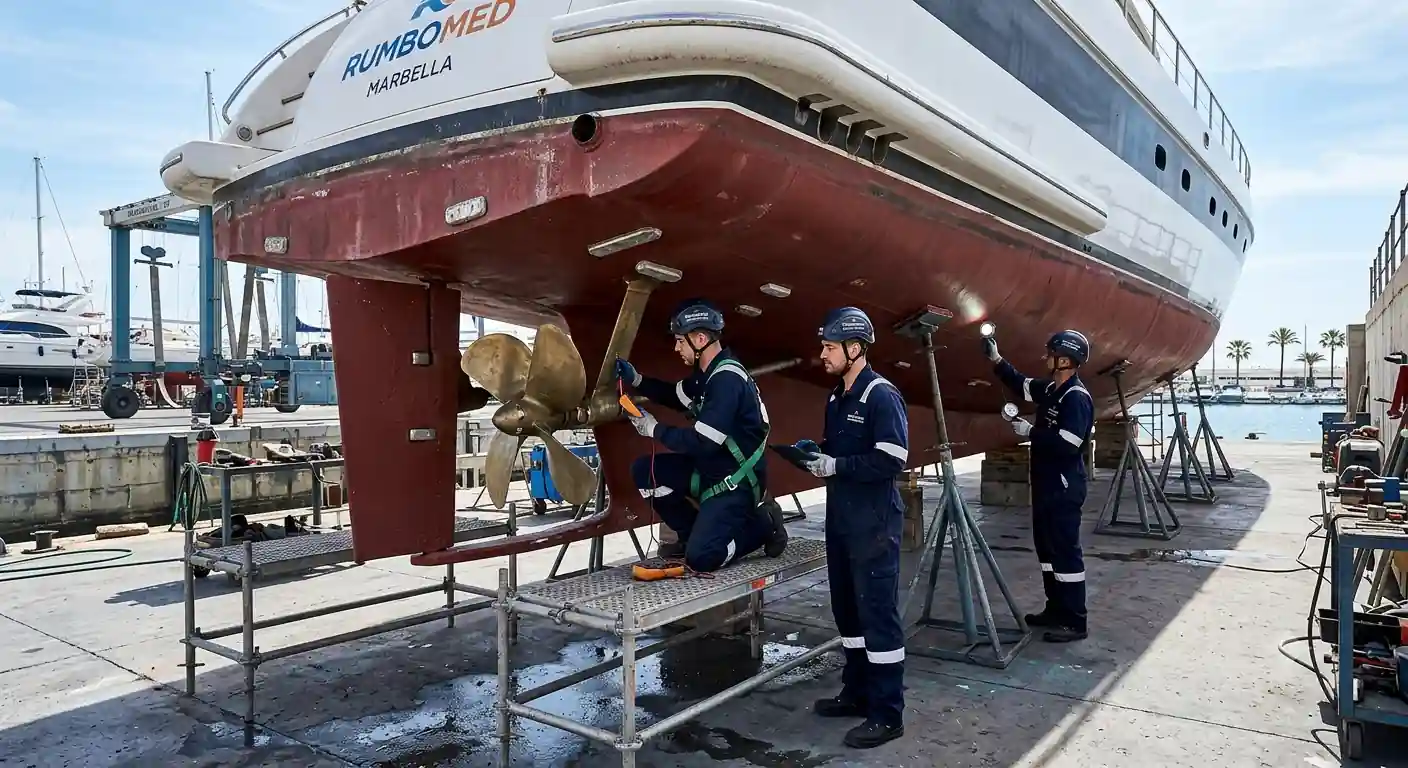
Keeping a vessel in peak condition requires a comprehensive strategy. While daily preventive maintenance ensures our systems function properly on every outing, there is a critical area that demands specialized, out-of-the-water interventions: the underwater hull.
A boat's hull spends months constantly exposed to salinity, marine currents, and the colonization of marine growth. Ignoring structural care or delaying necessary mechanical repairs not only drastically reduces speed and increases fuel consumption, but it also directly compromises the safety of the crew and the overall value of the vessel.
A well-maintained boat is synonymous with peaceful navigation. Combining a meticulous annual haul-out with immediate resolution of mechanical failures makes all the difference at sea.
RumboMed Team
1. The annual haul-out and hull treatment
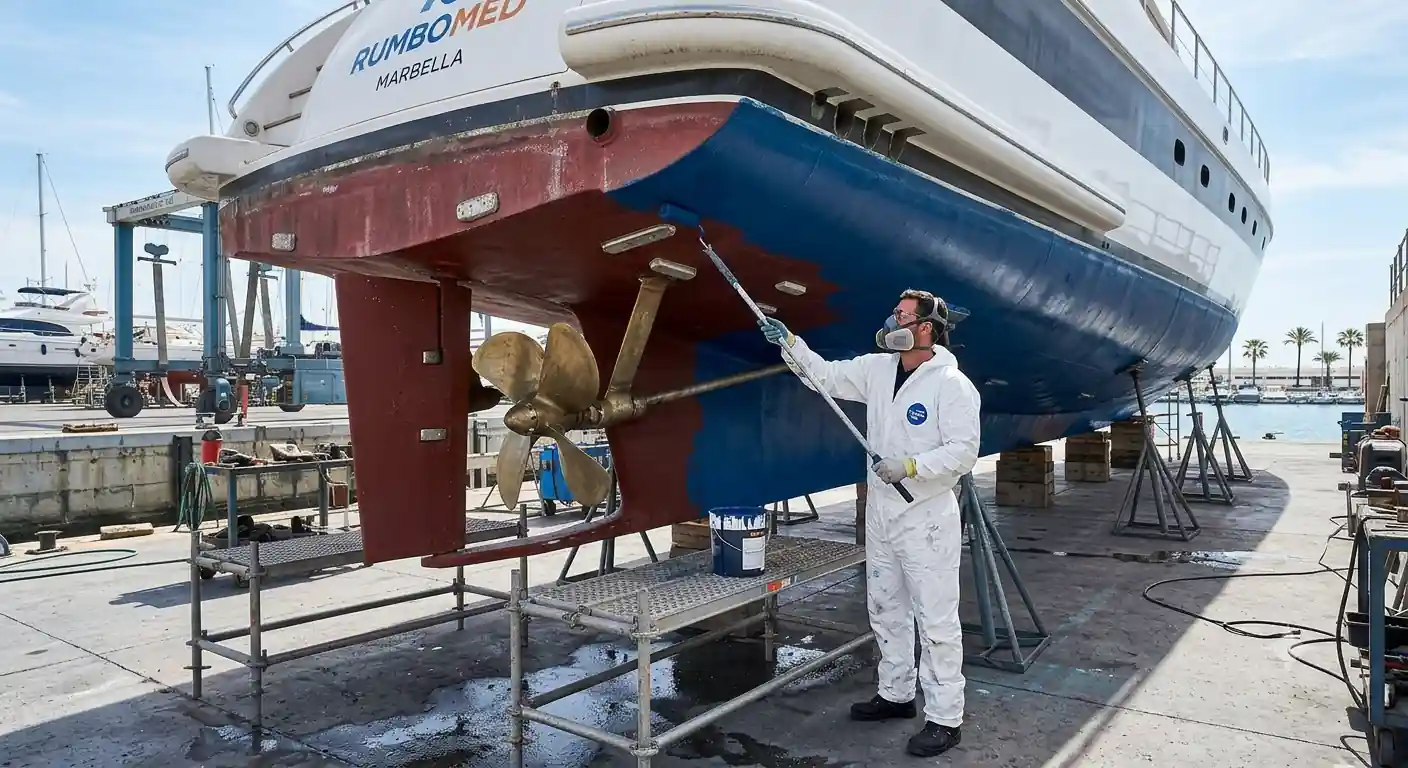
The underwater hull (or obra viva) is the part of the boat that remains permanently submerged. Once a year, it is essential to haul out the boat to a dry dock or boatyard to carry out structural work that cannot be performed while afloat at the mooring:
Pressure Washing & Antifouling Paint
After removing accumulated barnacles, algae, and marine growth using high-pressure water, the condition of the gelcoat or fiberglass is thoroughly inspected. Subsequently, antifouling or bottom paint is applied—a vital biocidal coating that prevents marine life from adhering, thus safeguarding the boat's hydrodynamics.
Galvanic Protection (Sacrificial Anodes)
Galvanic corrosion can rapidly destroy submerged metallic parts such as shafts, propellers, stern drives, and rudders. During the annual haul-out, replacing zinc or magnesium anodes is mandatory. These softer metals corrode on purpose, "sacrificing" themselves to save vital engine and drive components from electrolysis.
2. Corrective Maintenance: Acting with technical precision
Even with the best prevention, boats experience wear and tear due to operation under demanding sea conditions. Corrective maintenance consists of repairing or replacing components that have stopped functioning properly or show structural fatigue:
Composite & Fiberglass Repairs
- Osmosis treatment and prevention in fiberglass or sandwich hulls.
- Lamination and repairing gelcoat impacts or cracks.
- Structural reinforcement in areas subjected to high torsion or mechanical stress.
Propulsion & Steering Elements
- Drive shaft alignment and repairing damaged propellers.
- Replacing rudder bearings and ensuring watertightness (stuffing boxes/seals).
- Deep inspection of stern drives or advanced joystick maneuverability systems.
RumboMed's commitment to fleet safety
For private boat owners, coordinating haul-outs, bottom painting, and complex technical repairs with local shipyards along the Costa del Sol can be a logistical headache and a heavy financial burden.
At RumboMed, we apply these rigorous professional maintenance standards across our entire rental fleet. Every single one of our boats features a detailed technical log tracking hull inspections, anode replacements, and immediate corrective mechanical service. This allows us to guarantee that when you book a charter with us in Malaga, Marbella, or Puerto Banús, you are stepping aboard a boat in absolutely flawless condition.
Would you like to experience the excellent seafaring performance of our vessels first-hand? Explore our boat rental catalogue and enjoy the sea with the total peace of mind that only professional maintenance can provide.