
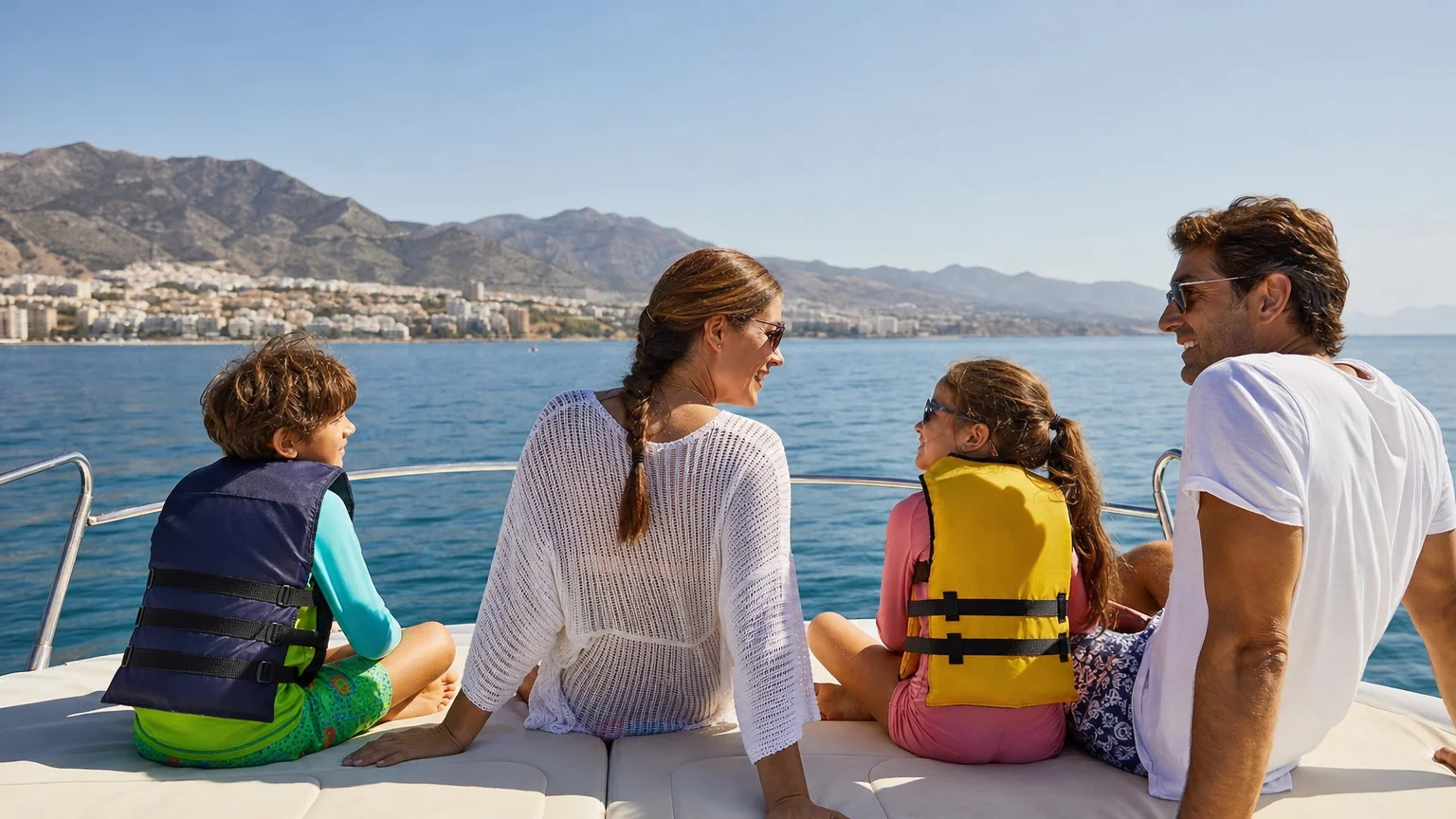
Advance planning: the key to enjoying the day without rushing
A boat trip with children begins before you step on board. It is a good idea to explain, in simple terms, what they are going to do, roughly how long they will be at sea and which basic rules they will need to follow. When children know what to expect, they usually feel calmer and cooperate better during the experience.
It is also important to adapt your expectations. Sailing with little ones does not have to be complicated, but it does require flexibility. They may want to move around, rest, eat earlier than planned or ask questions constantly. Accepting this as part of the adventure helps adults enjoy the experience more and convey a sense of calm.
- Talk to the children before the trip and tell them what the outing will be like.
- Arrive with enough time to avoid rushing when boarding.
- Check with the organising company about any special needs your family may have.
- Avoid overloading the day with too many plans before or after the boat trip.
Safety on board: clear rules and constant supervision
Safety should be the priority throughout the entire trip. Children need to understand that a boat is different from a house or a park: there are areas where they can walk and others where they must remain seated or accompanied. The rules should be few, clear and repeated naturally.
It is advisable for an adult to keep an eye on the children at all times, even when the sea is calm. The excitement of the trip may make them stand up quickly, move towards an area they should not enter or lose their balance. Close supervision helps prevent scares and allows any behaviour to be corrected before it becomes a problem.
- Always follow the instructions of the crew or the person in charge of the boat.
- Explain that they must not run, jump or lean over without permission.
- Keep children seated during manoeuvres, departures and docking.
- Before boarding, ask how life jackets and other safety equipment are managed.
Suitable clothing and sun protection
At sea, the perceived temperature can change quickly. Even if it is warm on land, the breeze can feel cooler during the trip. That is why it is advisable to dress children in comfortable, lightweight clothing that is easy to remove or put on in layers. A dry change of clothes can also be very useful if there is spray or if they swim when the activity allows it.
Sun protection deserves special attention. Radiation reflects off the water and exposure can be greater than it seems. Applying sunscreen before boarding and reinforcing protection with a cap, sunglasses and a lightweight T-shirt helps avoid discomfort during and after the trip.
- Bring a cap or hat that fits well and will not easily blow away.
- Apply sunscreen before getting on the boat and take the bottle with you.
- Include a thin jacket or light sweatshirt, especially outside the middle hours of the day.
- Prepare a complete change of clothes and a bag for storing wet items.
Food, water and preventing seasickness
Children can go from being excited to hungry or thirsty in just a few minutes. Bringing enough water and a simple snack helps keep them comfortable. Ideally, choose foods that are easy to eat, do not make too much mess and are not heavy on the stomach.
If a child tends to get carsick or feel unwell in other forms of transport, it is a good idea to mention this before the trip and act cautiously. It is better to avoid large meals just before boarding and encourage the child to look at the horizon if they start to feel uncomfortable. Keeping them in a calm, well-ventilated area can also help.
- Bring water in bottles that are easy to open and close.
- Choose simple snacks such as cut fruit, small sandwiches or plain biscuits.
- Avoid very fatty, heavy or hard-to-digest meals before sailing.
- Keep a bag close at hand in case a child feels seasick during the trip.
Entertainment: fewer screens and more curiosity
A boat trip offers plenty of stimuli to spark children’s curiosity: the movement of the water, the sound of the engine, views of the coastline, birds, other boats or the changing colours of the sea. Preparing small observation games can turn the outing into a more engaging experience.
Even so, it is a good idea to bring something calm for moments of waiting or tiredness. There is no need to carry lots of toys; in fact, small objects can be easily lost. It is better to choose compact, durable options that are suitable for using while seated.
- Suggest games such as looking for colours along the coast, counting boats or identifying shapes in the clouds.
- Bring a small notebook and pencils if the child enjoys drawing.
- Avoid toys with lots of pieces or items that could fall into the water.
- Keep screens only as occasional support if the child gets tired or needs to relax.
The adults’ attitude sets the pace of the experience
Children quickly sense when adults are nervous, in a hurry or too focused on making everything perfect. A calm, flexible and positive attitude helps them experience the boat trip as a safe adventure. If a minor setback arises, such as a splash, a stain or a change in mood, it is best to deal with it without overreacting.
It is also useful to share responsibilities among the adults. One person can take care of the bag, another can help the children put on their cap or jacket, and another can supervise them at certain moments. This simple organisation helps avoid oversights and allows everyone to enjoy the outing more.
- Use a calm tone when reminding children of the rules.
- Celebrate the children’s small discoveries during the trip.
- Accept that there may be moments of tiredness or impatience.
- Organise the bag so you can quickly find water, sunscreen or a change of clothes.
Conclusion
Preparing for a boat trip with children does not mean bringing half the house on board, but rather anticipating the essentials: safety, sun protection, suitable clothing, water, some food and a flexible attitude. With clear rules, constant supervision and a few simple resources to keep them entertained, the experience can become a very special family memory. Before boarding, clarify any doubts with the organising team and adapt the trip to the age and needs of the little ones. That way, sailing along the Costa del Sol will be a comfortable, safe and enjoyable adventure for everyone.
Want to enjoy the sea in Benalmádena?
Contact RumboMed to learn more about our nautical experiences.
Enquire on WhatsApp