
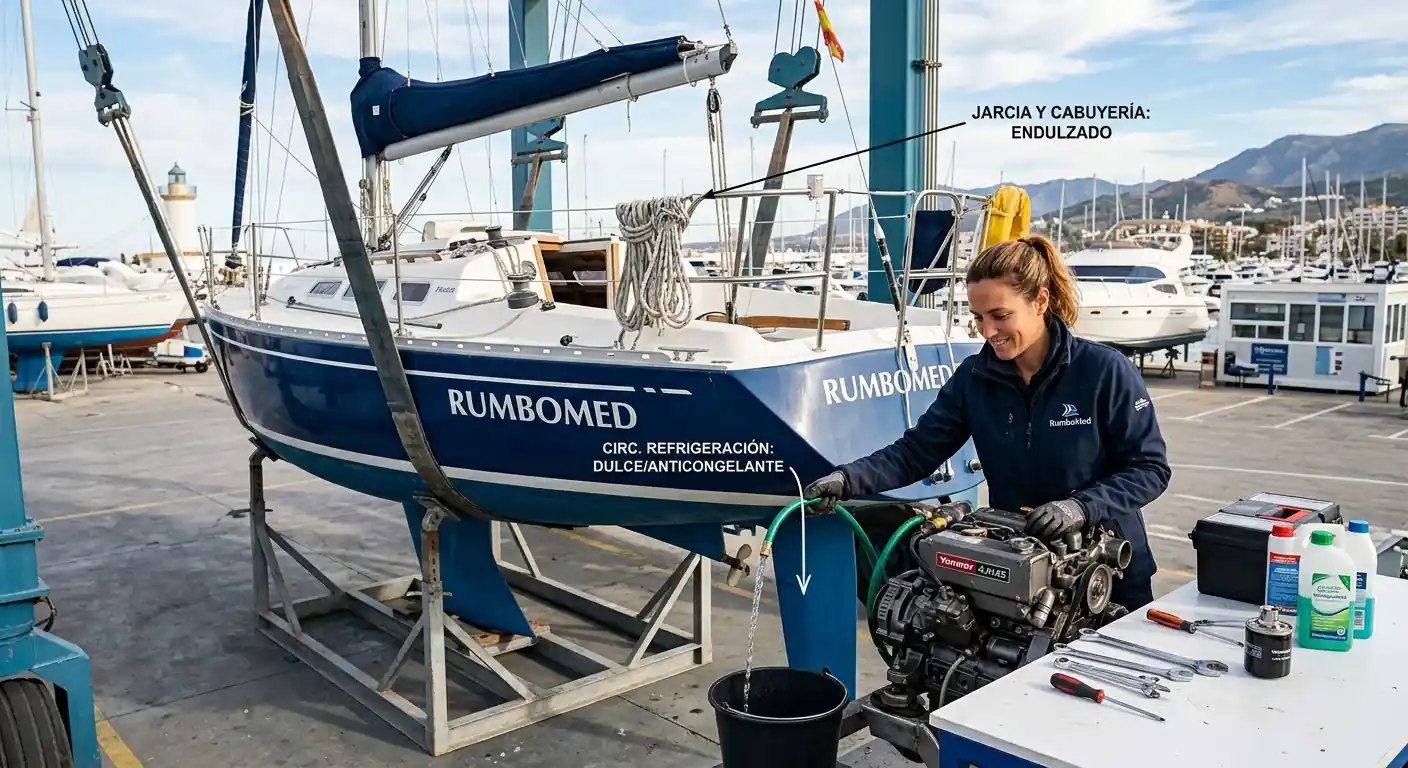
After the summer season comes to an end, it is time to prepare your boat for the months of low usage. Thorough winterization not only prevents costly breakdowns caused by corrosion, salinity, or freezing, but also ensures a smooth startup when spring arrives.
Whether your boat stays dry-stored or remains at its berth throughout winter, performing proper preventive maintenance will extend the lifespan of the engine, electronics, and interior equipment.
Proper winterization is not an expense—it is the best investment to preserve your boat's value and prevent 80% of start-up failures at the beginning of the new season.
RumboMed Team
Engine Maintenance & Protection

The engine is the heart of your boat and the most vulnerable component during long periods of inactivity:
Flushing the Cooling System
Flush fresh water through the raw water cooling circuit to remove salt deposits. In colder regions, add non-toxic antifreeze and biocide to the system before closing it up.
Oil, Filter & Impeller Replacement
Replace engine and transmission oil prior to winter storage; acidic residues in used oil accelerate internal corrosion. Inspect and replace the water pump impeller if needed.
Electrical System & Batteries
Deep discharges are the leading cause of premature marine battery failure over the winter months:
- Full Charge & Disconnection: Charge batteries to 100% and switch off the main battery isolators to eliminate phantom loads.
- Trickle Charging: If shore power float charging is unavailable, arrange periodic top-up charges every 3–4 weeks.
- Protecting Electronics: Remove exposed chartplotters, portable VHF radios, and displays to store them in a dry, temperature-controlled environment.
Interiors, Upholstery & Moisture Control
Mold and dampness can destroy boat interiors within weeks if adequate ventilation and humidity controls are omitted:
Interior & Living Spaces
- Drain and sanitize fresh water tanks to prevent bacterial growth and foul odors.
- Clean cushions and upholstery with neutral products; prop them on edge to allow air circulation.
- Place dehumidifiers (calcium salt absorbers or programmed units) in the main saloon and cabins.
Deck & Rigging
- Rinse sails, rigging, and running lines thoroughly with fresh water before storing in a dry area.
- Grease winches, windlasses, hinges, and gangways with marine water-resistant grease.
- Close non-essential seacocks and ensure all bilge compartments are kept clean and dry.
Summary: Essential Steps for Successful Winterization
Follow this basic checklist before closing up your boat for the season:
- Thoroughly wash hull and deck using fresh water and biodegradable marine soap.
- Flush, drain, and protect engine and fresh water cooling circuits.
- Replace engine oils/filters and inspect sacrificial anodes.
- Isolate electrical systems, ventilate enclosed spaces, and set up moisture management.
Need professional assistance winterizing your boat?
At RumboMed, we provide complete boat maintenance, dry-docking, servicing, and winterization services along the Costa del Sol. We handle everything so your boat is ready when you return to the water.
Request a Maintenance & Winterization Quote